
Our Rainforest Futures has been made possible by The National Lottery Heritage Fund thanks to National Lottery players.

Map showing the community woodland groups, other community groups, and organisations CWG has been in touch with as part of the development phase activities for the Our Rainforest Futures (ORF) project. Click on image to access the interactive map.
Our Rainforest Futures Project (ORF)
Our Rainforest Futures is a £8 million project supported by The National Lottery Heritage Fund, thanks to National Lottery players and others. It aims to mobilise, train and equip communities living in Scotland’s rainforest with the skills and knowledge needed to help restore this globally precious ecosystem for the next generation.
CWA is delighted to be a partner in this 7-year partnership project is led by the Woodland Trust (WT) and supported by the Alliance for Scotland’s Rainforest (ASR).
-
A NEW £5.98M PROJECT AIMS TO SAVE SCOTLAND’S RAINFOREST BY HELPING REMOTE COMMUNITIES THRIVE
A £5.98 million award from The National Lottery Heritage Fund will help restore Scotland's globally rare rainforest while supporting some of the country's most fragile rural communities.
The five-year project, Our Rainforest Futures, will create a new generation of rainforest guardians across Scotland's west coast including via three ‘hubs’ – in Torridon, Morvern and mid-Argyll. Through the project local people will gain skills, training and work opportunities while helping restore one of Britain's rarest habitats in areas already facing population decline and workforce shortages.
Our Rainforest Futures is an Alliance for Scotland's Rainforest project led by the Woodland Trust Scotland. Project partners are Argyll Countryside Trust, Community Woodlands Association, Plantlife, RSPB Scotland and SRUC.
Scotland's rainforest is one of Britain's most biodiverse habitats. Only around 30,000 hectares remain. These rain-soaked woodlands support internationally important lichens, mosses and liverworts as well as a huge variety of other wildlife. But they are threatened by overgrazing, invasive species and habitat loss.
At the same time many of Scotland’s most isolated rainforest communities face ageing populations, skills shortages and the loss of young people seeking opportunities elsewhere.
Caroline Clark, Scotland Director, The National Lottery Heritage Fund said: "Scotland's precious rainforest is internationally significant but largely unknown. A 2025 survey found fewer than one in three people even know it exists 1. This major investment, using funds raised by National Lottery players, recognises that the future of our rainforest and the future of many west coast communities are closely linked. With the right support, both can thrive.”
Julie Stoneman, Saving Scotland’s Rainforest Programme Manager at Plantlife said: "The people who live and work in the rainforest zone are essential to securing its future. Our Rainforest Futures will offer accredited and informal training in skills such as deer management, ecological surveying and invasive species removal. It will create more than 20 jobs and 15 traineeships, support community-led projects with grants and advice and provide exciting new opportunities for volunteering and learning.”
Calum Robertson was studying Wildlife & Conservation Management at SRUC when he joined an Our Rainforest Futures volunteer trip to Torridon in 2025.
"It was a heartwarming experience that left me inspired, helped me gain new skills and introduced me to people working in nature conservation. Soon after, I became employed by Argyll Countryside Trust as a Rainforest Squad Trainee, tasked with tackling invasive species in some of the most remote parts of Scotland’s rainforests. This has since developed into a split role as Rainforest Operative/Woodland Coordinator, involving both management and delivery of rainforest restoration projects. It is a dream-turned-reality to do this for a living, and I believe that volunteering with Our Rainforest Futures was key to making that happen."
As part of the project, SRUC will develop and deliver training to help people in rainforest communities gain the skills needed to restore and protect Scotland's rainforest, just as Calum has done.
The National Lottery Heritage Fund grant provides 72% of the funding needed for Our Rainforest Futures, which has a total budget of £8.3M. The project is also supported by NatureScot and players of Postcode Lottery.
The people who live and work in Scotland's rainforest are essential to securing its future. Our Rainforest Futures aims to mobilise, train and equip people with the skills and knowledge to be guardians and advocates of Scotland’s precious temperate rainforest. The project will increase awareness of the rainforest, build capacity and expand the available workforce. It will seek opportunities for local people to gain wellbeing, economic and social benefits from the rainforest. It aims to leave both Scotland's rainforest habitat and its communities more resilient.
The project will operate across Scotland's west coast via three ‘hub’ areas where there are fragile communities, often with declining and ageing populations and a scarcity of employment and training opportunities to keep young people in the community.
Torridon – including Kinlochewe and Shieldaig, and involving people from the wider area including Lochcarron, Applecross and Gairloch.
Morvern – Lochaline and across the peninsula (with larger settlements in nearby Tobermory and Strontian).
Mid-Argyll – including Crinan, Tayvallich, Lochgilphead, Ardrishaig, Tarbert and surrounds.
The delivery phase of the project has been made possible with funding from The National Lottery Heritage Fund thanks to National Lottery players.
It is an Alliance for Scotland's Rainforest project led by the Woodland Trust. Project partners include Argyll Countryside Trust, Community Woodlands Association, Plantlife, RSPB Scotland and SRUC.
Our vision is: A national movement of rainforest custodians equipped and enabled to save Scotland’s rainforest.
Follow @OurRainforestFutures on Facebook.
-
Our Rainforest Futures aims to mobilise, train and equip people with the skills and knowledge to be its guardians and advocates. The project will increase awareness of the rainforest, build capacity and expand the available workforce. It will seek opportunities for local people to gain wellbeing, economic and social benefits from the rainforest. It aims to leave both Scotland's rainforest habitat and its communities more resilient.
The development phase of the project has been made possible with funding from the National Lottery Heritage Fund.
Besides CWA, project partners include Argyll and the Isles Coast and Countryside Trust, Plantlife Scotland, RSPB Scotland, Scotland's Rural College and the Scottish Rainforest Education Centre.
The project vision is: a national movement of rainforest custodians equipped and enabled to save Scotland’s Rainforest.
-
ORF Development Phase - CWA workstreams
CWA focused on the following areas (see below) during the development phase (July 2024 - October 2025) . Click on the titles to find out more and access the Reports.
-
This survey, conducted by CWA, closed on March 31st 2025. It’s purpose was to gather the views of community groups, active in or close to Scotland’s rainforest zone, with regard to Networking, Training, Community Enterprise and Funding, towards achieving the aims of the project. Find out more about the survey and feedback in the links below:
-
This survey (closed September 30th 2025) gathered project ideas from community groups (in or close to Scotland’s rainforest zone) about what they might realistically do, during the delivery phase of the ORF project, to help restore our rainforest landscapes.
Read the report - Survey 2. Rainforest Project Ideas
-
CWA explored the possible establishment of a community grant pot to support community groups, and so help sustain their rainforest restoration work beyond the development phase of the ORF project.
Read the Report - Community Grant Scheme - scoping and design
-
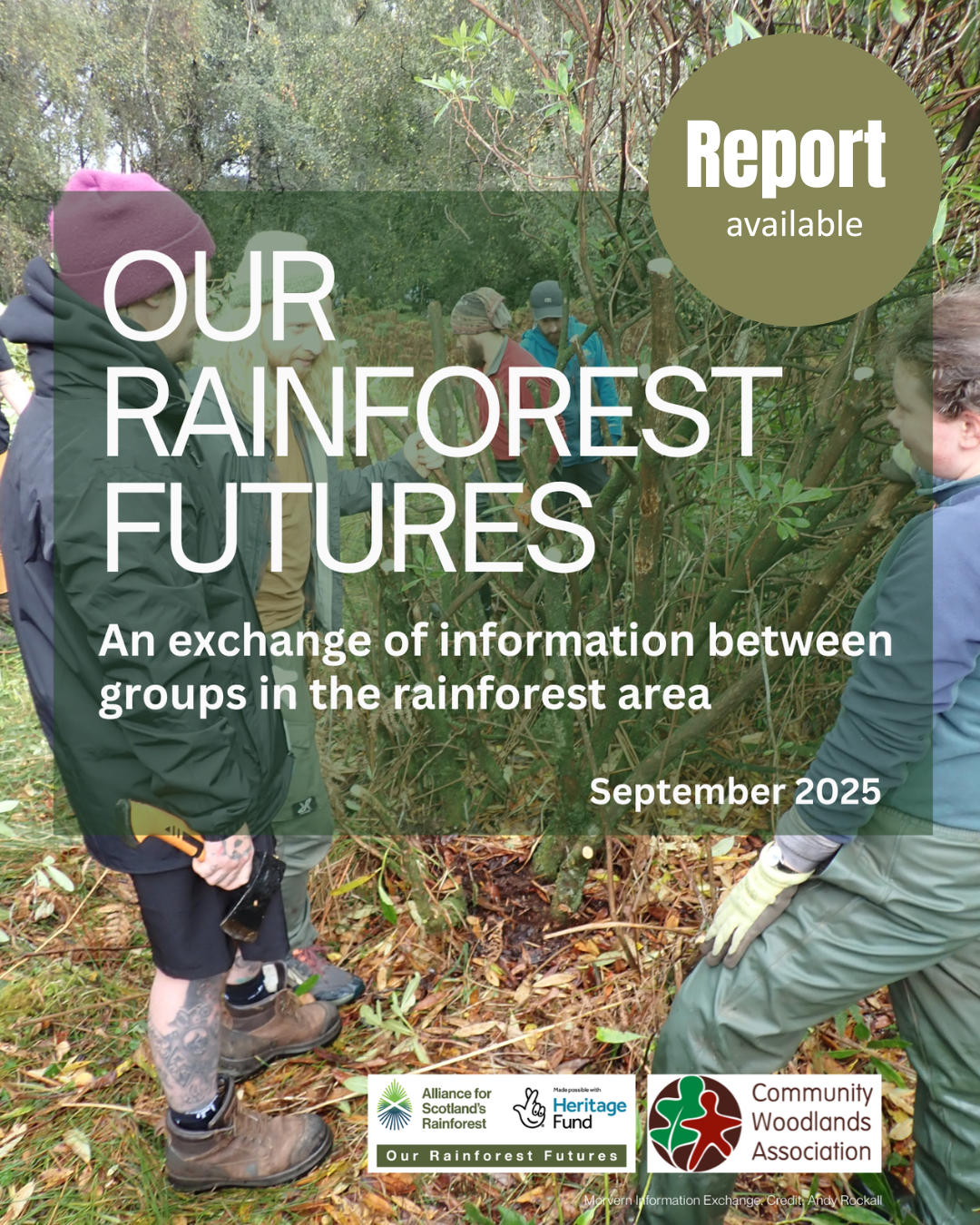
An action in the development phase was to organise an exchange of information between groups across the rainforest area on a topic beneficial to rainforest. And the intent to learn as much from the organisation of the event as the topic.
Read the report: An exchange of information between groups in the rainforest area
-
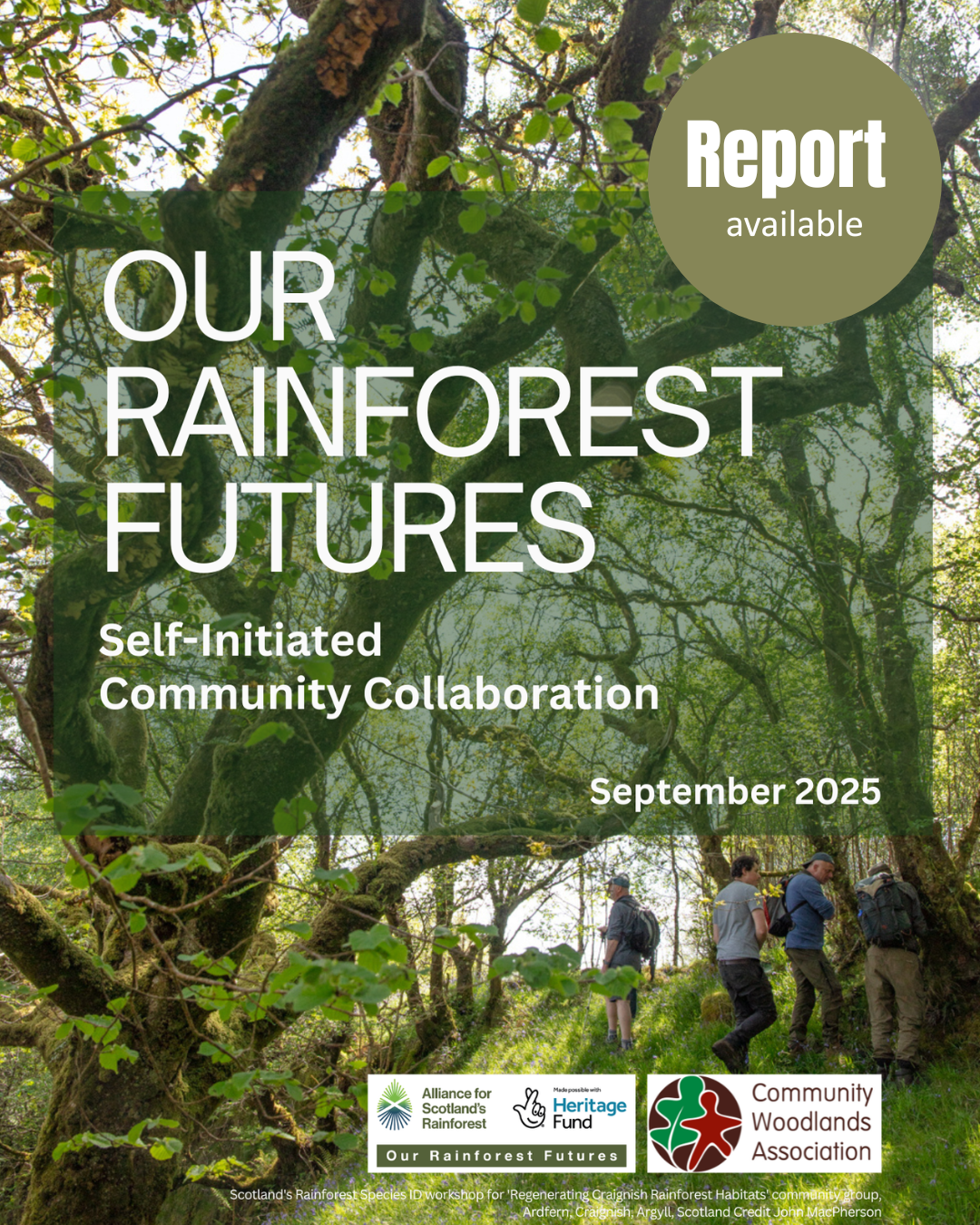
The concept was to explore and understand the environment that enables organized community groups to come together to collaborate, without the outside stimulus of any organization, governing or representative body. What prevents and conversely, what makes it possible for groups to initiate collaborative works themselves?
Read the report: Self-initiated Community Collaboration